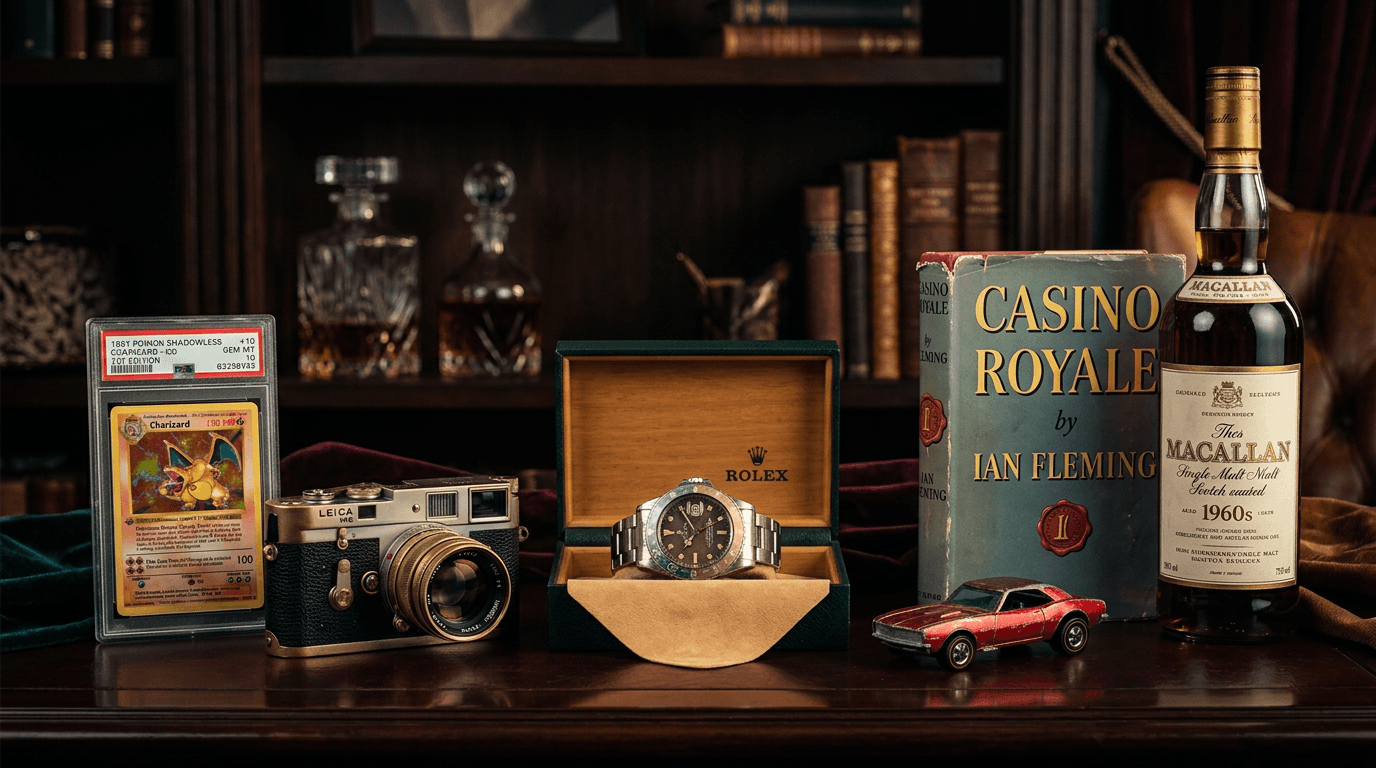
When a high-value collectible appears on screen, it undergoes a transformation. It moves from being a static object of utility or wealth to a vessel for narrative. And in the world of collecting, narrative is the ultimate multiplier of value.
The "Screen Effect" on Horology
The most obvious beneficiary of the silver screen is, and has always been, the watch industry. We can trace the lineage from Sean Connery’s Rolex Submariner Ref. 6538 in Dr. No to the "Paul Newman" Daytona, which achieved its mythic status largely due to the actor’s curated public image.
But today, the influence is more surgical. When The Bear showcased Jeremy Allen White’s character wearing a vintage Breitling or an Omega Seamaster, search volumes for those specific references spiked among a demographic that previously hadn't considered "vintage tool watches" part of their vocabulary. The screen provides a proof-of-concept for how these objects live in the real world.
For the serious collector, this creates a volatile environment. A watch that was trading at a steady market value can suddenly become a "grail" overnight because a costume designer chose it to signal a character’s understated sophistication. This is why we stress the importance of real-time market monitoring; when pop culture moves, the floor price moves with it.
Handbags, Instruments, and the Narrative Premium
It isn’t just watches. In the realm of luxury handbags, the "Birkin bait" used in shows like Emily in Paris or Sex and the City creates a tangible demand cycle. However, the influence has evolved beyond mere brand placement. We are now seeing "story-driven provenance."
Consider the world of musical instruments. When a specific vintage Fender Stratocaster is featured in a high-fidelity documentary or a prestige drama about the 1970s music scene, it doesn't just pique the interest of musicians—it alerts the asset-class collectors. They aren't buying the wood and wires; they are buying the era the screen just made them nostalgic for.
The Psychology of the Prop-to-Asset Pipeline
Why does this matter to us? Because as collectors, we are inherently emotional creatures driven by the pursuit of "The Best." Film and television define what "The Best" looks like for a generation.
When a collectible is featured in a prestige production, it receives a "cultural insurance policy." It is no longer just a speculative asset; it is a piece of documented history. This is particularly true for sports memorabilia and trading cards, where documentary series like The Last Dance fundamentally restructured the market for 1986 Fleer Jordan rookies. It moved them from the sports world into the fine art world.
Navigating the Hype: A Strategic Approach
For the budding enthusiast, the "screen effect" can be a trap. Buying into the height of a TV-induced frenzy often leads to overpaying at the peak. For the seasoned collector, however, these cultural moments are an opportunity to re-evaluate the protection and organization of their existing holdings.
If you happen to own the reference that just went viral on a Netflix hit, your risk profile has changed. Your insurance coverage, based on a three-year-old appraisal, is likely now insufficient. This is where the intersection of passion and pragmatism is vital.
At WAX Collect, we’ve built a platform that understands this volatility. Our free collection management tools allow you to catalog these assets with the nuance they deserve—tracking not just what they are, but their cultural relevance. Whether you’re holding a handbag that just saw a 20% bump in demand or a vintage timepiece that is suddenly the talk of the forums, having a digital vault that mirrors the real-world market is no longer optional.
The Final Take
We collect because we want to touch the stories we love. Cinema and television are the greatest storytellers we have, so it’s only natural that they dictate the rhythm of our markets. The key is to remain the protagonist of your own collecting journey—informed by the screen, but guided by data and proper safeguarding.
After all, a prop is just a tool for a director. In your hands, and under the right protection, it’s a legacy.