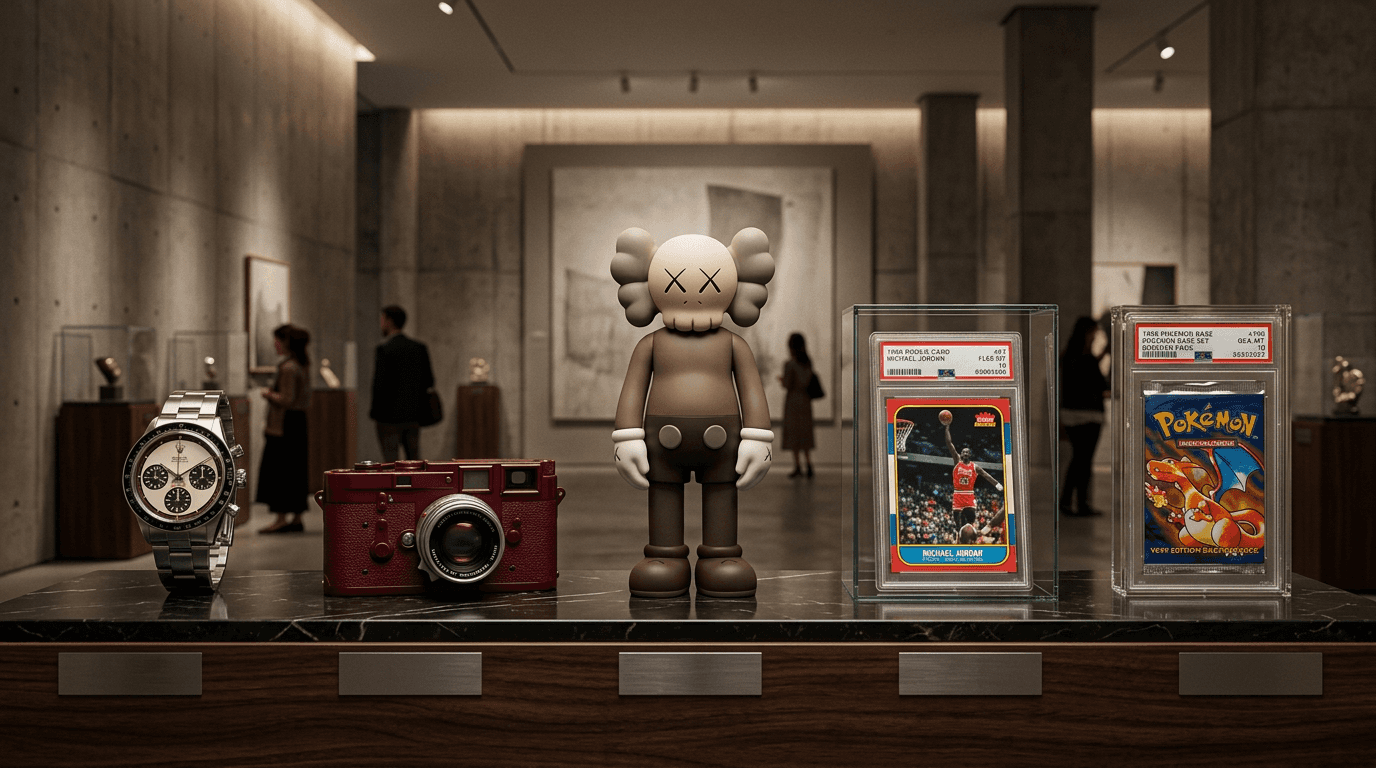

These are the catalysts. They changed how we define value, how we verify authenticity, and how we perceive the line between a hobby and a high-stakes asset class.
1. The 1952 Topps Mickey Mantle #311
To understand the modern sports card market, you have to look at the #311 Mantle. It isn't Mantle’s rookie card (that honor belongs to the 1951 Bowman), but it is the card that transitioned the industry from a children's pastime into a legitimate financial vertical.
When thousands of unsold 1952 high-number series cases were famously dumped into the Atlantic Ocean by Topps executive Sy Berger, scarcity was created by accident. Decades later, as the card climbed into the seven-figure stratosphere, it forced the industry to develop standardized grading. Without the #311 Mantle, we likely wouldn't have the sophisticated third-party authentication ecosystem that defines the $13 billion sports card market today.
2. The Rolex "Paul Newman" Daytona (Ref. 6239)
Before the late 1980s, the Rolex Daytona was an underdog—a manual-wind chronograph that sat in jeweler cases gathering dust. The "exotic" dial, characterized by its Art Deco font and square-end hash marks, was considered a failure.
Then came the association with Paul Newman. The Ref. 6239 didn't just create the "celebrity provenance" premium; it birthed the modern vintage watch market. It proved that aesthetic nuance and historical narrative could outweigh mechanical complexity. When Newman’s personal watch sold for $17.75 million in 2017, it codified the timepiece as an alternative asset, shifting the focus from horology to "investment grade" curation.
3. Action Comics #1 (1938)
This is the Big Bang of pop culture collectibles. Before Action Comics #1, comic books were ephemeral—cheap entertainment printed on acidic paper meant to be read and discarded. The debut of Superman changed the utility of the medium.
It was the first object to prove that "low culture" could achieve "high art" valuations. Its survival created the archival movement within collecting. Because the paper was never meant to last, the object’s fragility became its most valuable attribute. This single issue necessitated the invention of "slabbing" (encapsulation), transforming a floppy book into a static, tradable brick of historical capital.
4. The 1985 Air Jordan 1 "Bred"
Sneaker collecting existed in pockets of New York and Philly in the early 80s, but the "Bred" (Black and Red) Jordan 1 turned footwear into a commodity. The NBA’s purported ban of the colorway—and Nike’s subsequent "Banned" marketing campaign—shifted the object from athletic equipment to a symbol of rebellion and status.
This object is the reason we have stock-market-style resale platforms today. It introduced the concept of the "drop" and the "colorway," terms that now dictate the liquidity of the multi-billion dollar secondary sneaker market. It was the first time a mass-produced consumer good was successfully treated with the same reverence as a limited-edition lithograph.
5. The 1999 Pokémon 1st Edition Shadowless Charizard
If the Mantle card built the foundation of sports collecting, the Shadowless Charizard did the same for the "TCG" (Trading Card Game) sector. It represents the bridge between nostalgia and institutional investment.
Unlike sports cards, which rely on the physical performance of an athlete, the Charizard’s value is rooted in a global media ecosystem. Its rise signaled a demographic shift: a new generation of high-net-worth individuals who value digital-native IPs as much as Boomers value Mickey Mantle. It turned "gaming" into "investing," bringing a level of liquidity and volume to the hobby that was previously unimaginable.
Why This Matters to the Collector
These five objects prove that the market is never static. They represent shifts in cultural psychology. When an object moves from a "thing you own" to an "asset you manage," the risks change.
Whether you are holding a "Banned" Jordan 1 or a Ref. 6239, the transition from hobbyist to serious collector requires a shift in infrastructure. As values escalate, the "shoebox in the closet" method fails. This is where precision matters. At WAX Collect, we see these objects not just as items, but as significant risks and opportunities. Our platform is built to handle the complexity these objects introduced—offering the tools to catalog, value, and insure assets that the world once considered mere toys.
In this market, the signal is the history. The noise is the hype. Stay focused on the objects that changed the game, and you’ll understand where the game is going next.


