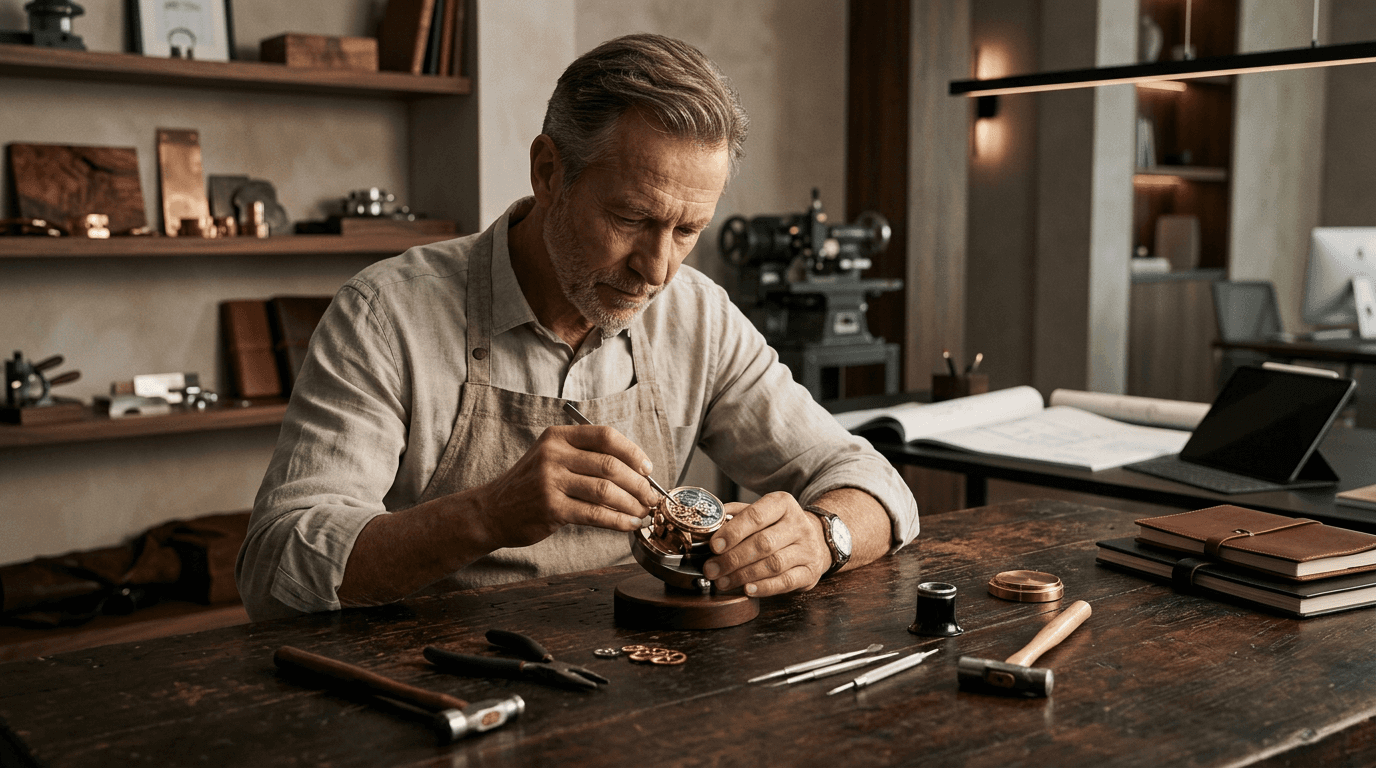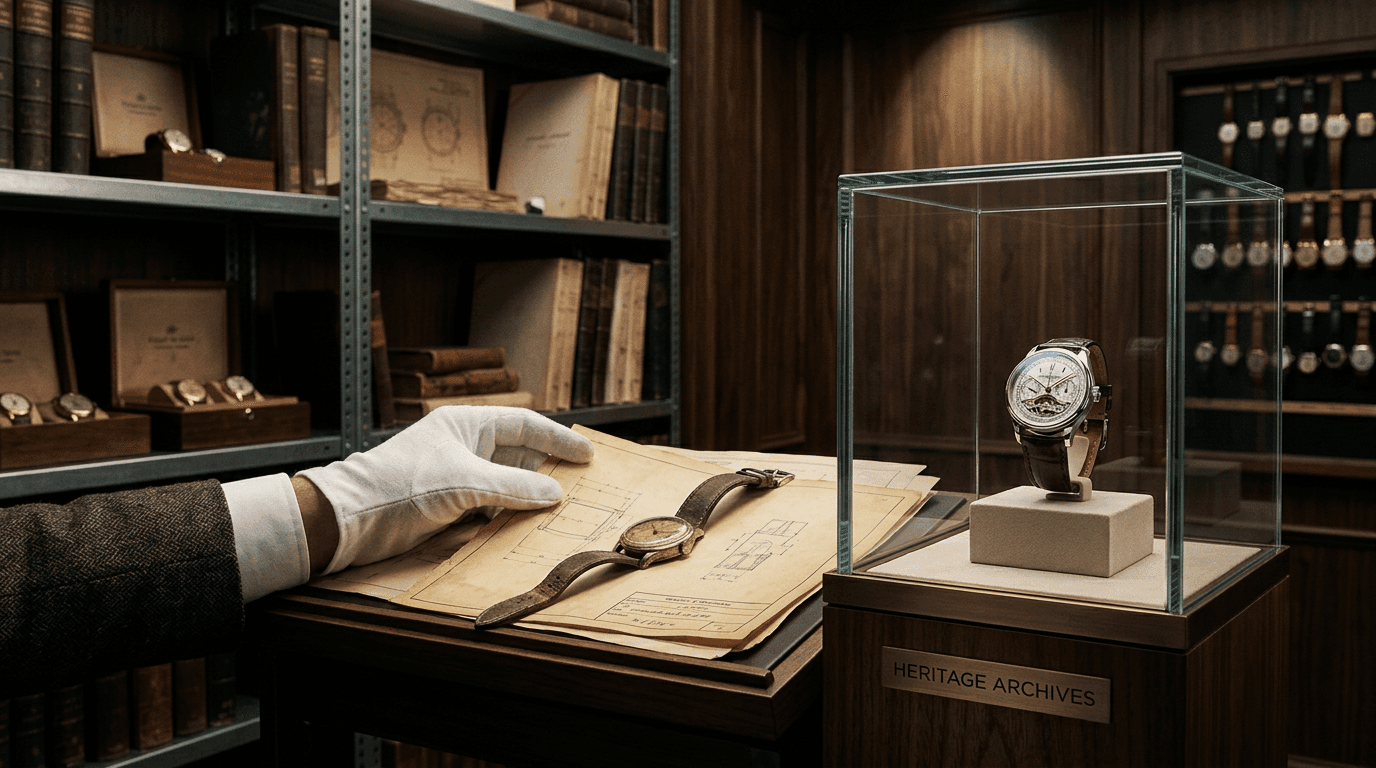

Archives—once the dusty, neglected basements of Swiss manufactures—have been reimagined as the ultimate competitive advantage. For brands, they are a weapon against the fakes; for auction houses, they are the arbiter of truth; and for you, the collector, they are the bedrock of value.
The Institutional Land Grab
We are currently witnessing an archival arms race. Look at the recent moves by the heavyweights: Richemont’s dedicated heritage departments are expanding; Zenith has launched its "Icons" program, sourcing and restoring its own vintage pieces; and Audemars Piguet has transformed its Le Brassus headquarters into a literal architectural monument to its history.
Why now? Because in a market saturated with "newness," nothing scales like authenticity. A brand that can prove its lineage with a ledger entry from 1954 has a moat that a microbrand—no matter how technically proficient—cannot replicate.
But this isn't just a marketing flex. It’s a retail strategy. By controlling their archives, brands are successfully taking back the narrative (and the revenue) of the pre-owned market. When a brand issues a "Certified Pre-Owned" certificate backed by archival research, they aren't just selling a watch; they are selling peace of mind.
The Auction House as Academic
Auction houses like Phillips, Christie’s, and Sotheby’s have essentially turned into research institutions. The days of "buyer beware" are fading, replaced by a standard of scholarship that rivals art history departments at Ivy League universities.
The archive is the final judge. We’ve seen six-figure swings in price based solely on an "Extract from the Archives." These documents verify that a specific serial number left the factory with the dial and case configuration it currently possesses. In an era where "franken-watches"—genuine parts assembled into a non-original whole—are increasingly sophisticated, the archive is the only thing standing between a record-breaking sale and a total loss.
Why This Matters to You
If you are a budding collector, the rise of the archive is a signal to slow down. It’s a reminder that a watch is only as good as its provenance. If you are a serious enthusiast, your archive is your insurance.
This is why we built WAX Collect. We recognized that the "intangibles"—the receipts, the service records, the scans of archival extracts—are just as valuable as the watches themselves. In our ecosystem, these aren’t just files; they are an organized defense of your investment. Whether you are using our free digital cataloging tools to track a growing collection or working with our concierge team to verify the history of a potential acquisition, you are participating in this new archival standard.
The Psychology of Provenance
Beyond the dollars and cents, there is a human element to this. Collecting is an act of storytelling. When you hold a 1960s Speedmaster, you aren't just holding a chronograph; you’re holding a piece of the space race. The archive is the script for that story.
Institutions are realizing that their history is their most liquid asset. For the collector, this means that data-driven transparency is no longer optional—it’s the price of entry. As the market continues to mature, the gap between "documented" and "undocumented" assets will only widen.
The lesson is clear: Don’t just collect the watch. Collect the history. In the modern market, the person with the most information wins.