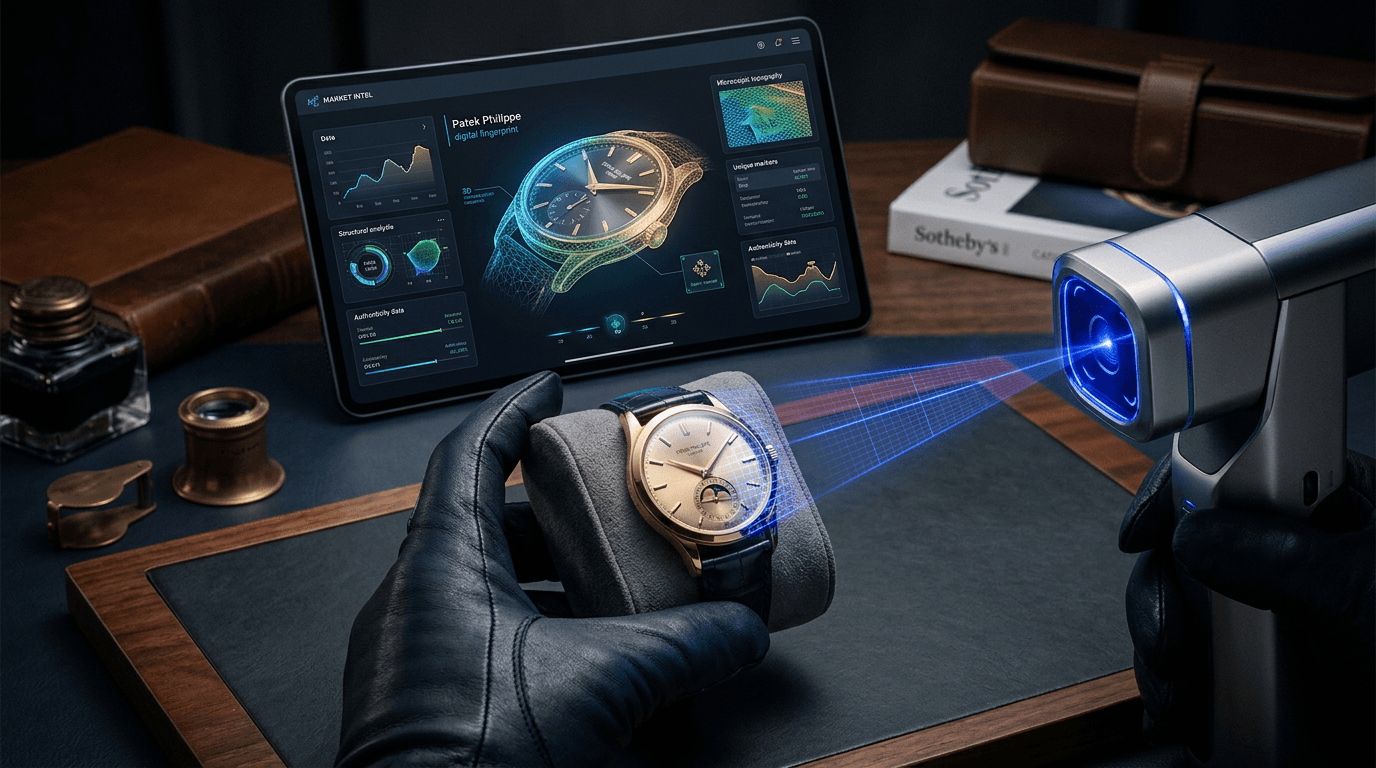

Today, a quiet industrial revolution is underway. A new breed of companies is moving beyond simple photography, deploying AI, multi-spectral imaging, and high-fidelity 3D scanning to create "digital twins" of the world’s most significant objects. This isn't about the metaverse or digital art. It is about the industrial-grade digitization of physical history.
The New Standard of Proof
The shift is being driven by the realization that a 2D image is no longer sufficient for authentication or insurance in a globalized market. Companies like Artory and 4ARTechnologies have pioneered the use of "digital fingerprints." By using high-resolution scanners to capture the microscopic topography of a canvas or the unique grain of a vintage watch dial, these firms create a tamper-proof record of an object’s physical state.
For the serious collector, this matters because it shifts the burden of proof from subjective expertise to objective data. If a Patek Philippe is sent for service or an Andy Warhol is loaned to a gallery, a "before and after" scan can detect physical changes invisible to the naked eye. This level of granularity is becoming the baseline for high-value transactions at houses like Christie’s and Sotheby’s.
AI and the Death of the Spreadsheet
While hardware captures the image, AI is doing the heavy lifting of organization. Startups are now utilizing machine learning to scrape historical auction results and cross-reference them with visual data points. This allows for automated "condition reporting" at scale.
In the sports memorabilia and trading card space, companies like PSA and CGC have already integrated AI-driven grading systems. Instead of a human with a loupe, sensors measure centering, surface edges, and corners to a nanometer. This isn't just about speed; it’s about removing the "human element" (read: inconsistency) from the value equation.
For museums and massive private estates, firms like Iron Mountain Entertainment Services (IMES) are digitizing massive archives that have sat in dark rooms for half a century. They are turning physical "stuff" into searchable, liquid data.
Why Data Sovereignty Matters
The "Why" behind this trend is simple: liquidity. An asset that is documented, authenticated, and digitally archived is significantly easier to sell, borrow against, or insure than one that exists only in the physical world.
However, as we digitize, the question of who holds the data becomes paramount. If your collection's blueprints live on a proprietary server of a single auction house, you are locked into their ecosystem. This is why we at WAX Collect emphasize the importance of independent, carrier-agnostic digital management. Whether you are using our free digital vault to catalog your assets or leaning on our white-glove concierge to verify provenance, the goal is the same: clarity.
A digital twin doesn't just protect you against theft or damage; it protects you against the erosion of value that comes from poor record-keeping.
The Takeaway for the Modern Collector
Whether you are a budding enthusiast or a seasoned veteran with a climate-controlled warehouse, the takeaway is clear:
Documentation is an Asset: Treat your digital records with the same reverence as the physical item. A professional 3D scan or high-res archive is an investment in the item’s future resale value.
Mitigate Human Error: Move away from manual spreadsheets. The companies winning the market right now are those leveraging AI to automate the boring—but essential—task of inventory management.
Future-Proof Your Portfolio: As insurance carriers move toward data-driven underwriting, those with comprehensive digital archives will likely find more favorable terms and faster claims processing.
At WAX, we built our platform to be the nerve center for this digital transition. By providing the tools to organize and safeguard these assets, we ensure that the human stories behind these collections aren't lost to time—or to a disorganized filing cabinet.
The world’s most valuable collections are becoming bits and bytes. If you haven't started digitizing yours, you’re already behind the curve.