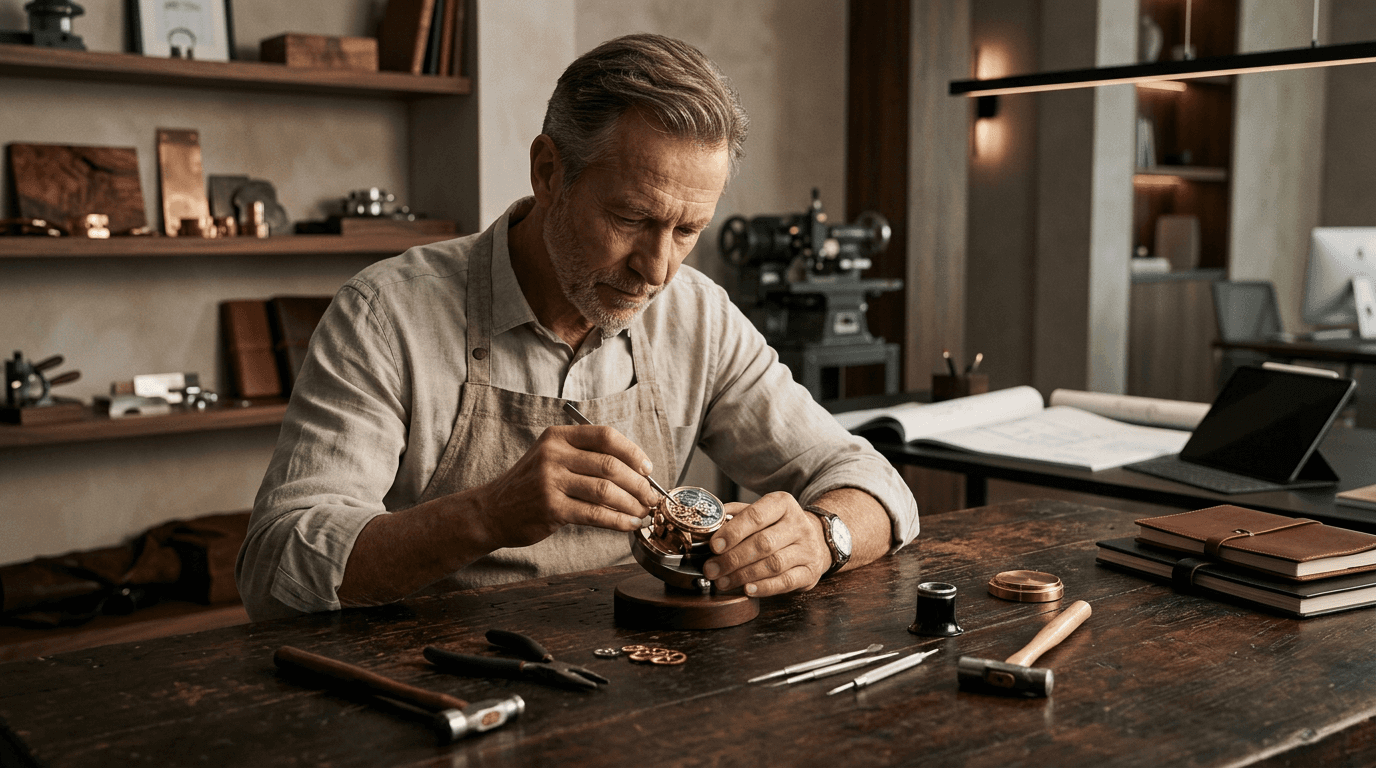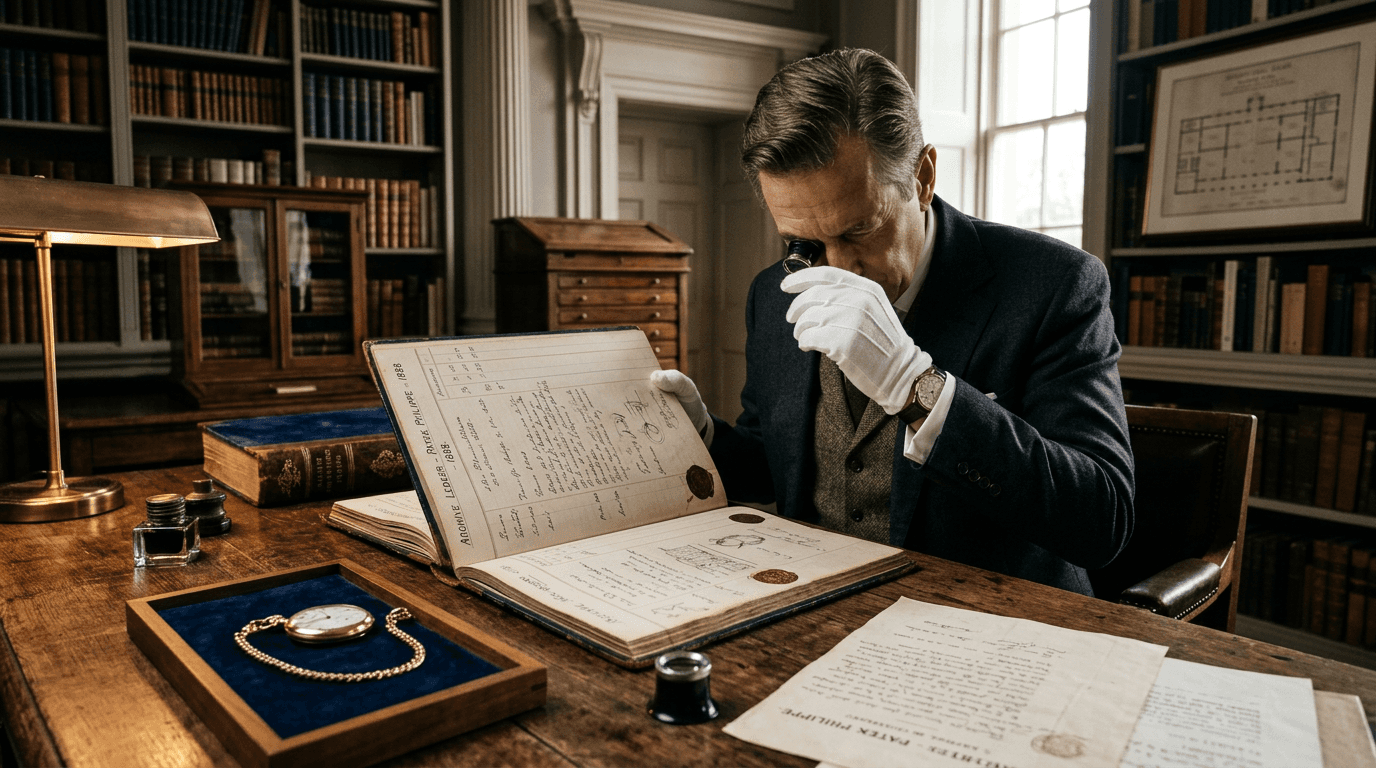

Welcome to the age of archive-led collecting. Today, the most sophisticated collectors aren't just looking at watches; they are hunting for the paper that proves they exist.
The Shift from Aesthetic to Academic
There is a growing class of "scholar-collectors" who view a timepiece not merely as an object of mechanical art, but as a historical record. This shift has been fueled by the democratization of information. In the past, factory records and internal catalogs were the guarded secrets of a few elite dealers and museum curators. Now, thanks to digital archives, high-resolution scans of 1960s Japanese advertisements, and the tireless work of community researchers, the "truth" of a watch’s configuration is only a few clicks away.
Why does this matter? Because in a market rife with "franken-watches" and service dials, documentation is the only insurance against the erosion of value. When a reference 2499 Patek Philippe appears at auction, the price delta between a "standard" example and one with a confirmed history in a period catalog can be hundreds of thousands of dollars. The archive provides the context that transforms an object into a monument.
The Power of the Ephemera
We are seeing a fascinating trend where the "ephemera"—the catalogs, the original receipts, the vintage hangtags, and even the period-correct shipping boxes—are becoming as coveted as the watches themselves.
Historical documentation serves three primary functions in the modern market:
Verification of Rarity: Old catalogs often reveal that certain dial configurations or bracelet options were produced for only a single year or a specific market. This "discovered rarity" can instantly reprice a previously overlooked reference.
Psychological Connection: There is a visceral thrill in seeing a 1970s print ad for a GMT-Master and seeing the exact lug profile and bezel fade mirrored in the piece on your wrist. It anchors the watch in a specific cultural moment.
Risk Mitigation: For the serious investor, data is the antidote to volatility. Buying a watch that is "notarized" by historical record ensures that the piece will always have a seat at the table of horological significance.
The Forensic Collector’s Toolkit
This movement isn't limited to the Patek and Rolex giants. We are seeing a massive surge in archive-led interest in brands like Longines, Zenith, and Seiko.
Longines, in particular, has set the gold standard for brand transparency. Their archival service—where a collector can provide a serial number and receive a digital extract detailing the original sale date and destination—has created a loyal secondary market. When you know your watch was originally delivered to a small jeweler in Buenos Aires in 1944, the watch ceases to be a commodity. It becomes a story.
At WAX, we see this evolution reflected in how our community manages their holdings. The most meticulously organized collections on our platform aren't just lists of serial numbers; they are digital libraries. Our collectors use our free management tools to vault high-resolution scans of Extract from the Archives, original warranty papers, and even screenshots of the auction listings where they acquired the piece.
Why the "Paper Trail" Matters to You
Whether you are a budding enthusiast or a seasoned titan of the auction circuit, the archive is your best friend.
For the budding collector, studying vintage catalogs is the most cost-effective way to develop an "eye." It allows you to spot incorrect hands or replaced crowns before you wire the funds. It builds the foundational knowledge that prevents expensive mistakes.
For the serious collector, data-driven collecting is about legacy. A collection accompanied by a comprehensive archive of its own history is significantly more liquid and easier to value for insurance purposes. Our concierge specialists often work with clients to track down missing documentation or link pieces to historical records, ensuring that the "asset" side of the collectible is as robust as the "passion" side.
The Human Element
Ultimately, archive-led collecting is about the people. It’s about the watchmaker who scrawled a note in a ledger sixty years ago and the researcher who found it yesterday. It’s about a community that values truth and provenance as much as gold and steel.
At WAX Collect, we believe that safeguarding a luxury asset means more than just a policy; it means honoring the history of the object. By organizing your documentation and leveraging market intel, you aren't just "owning" a watch—you’re becoming its steward.
The next time you consider a purchase, don't just look at the dial. Ask for the paper. The archive doesn’t just tell you what a watch is; it tells you why it matters.