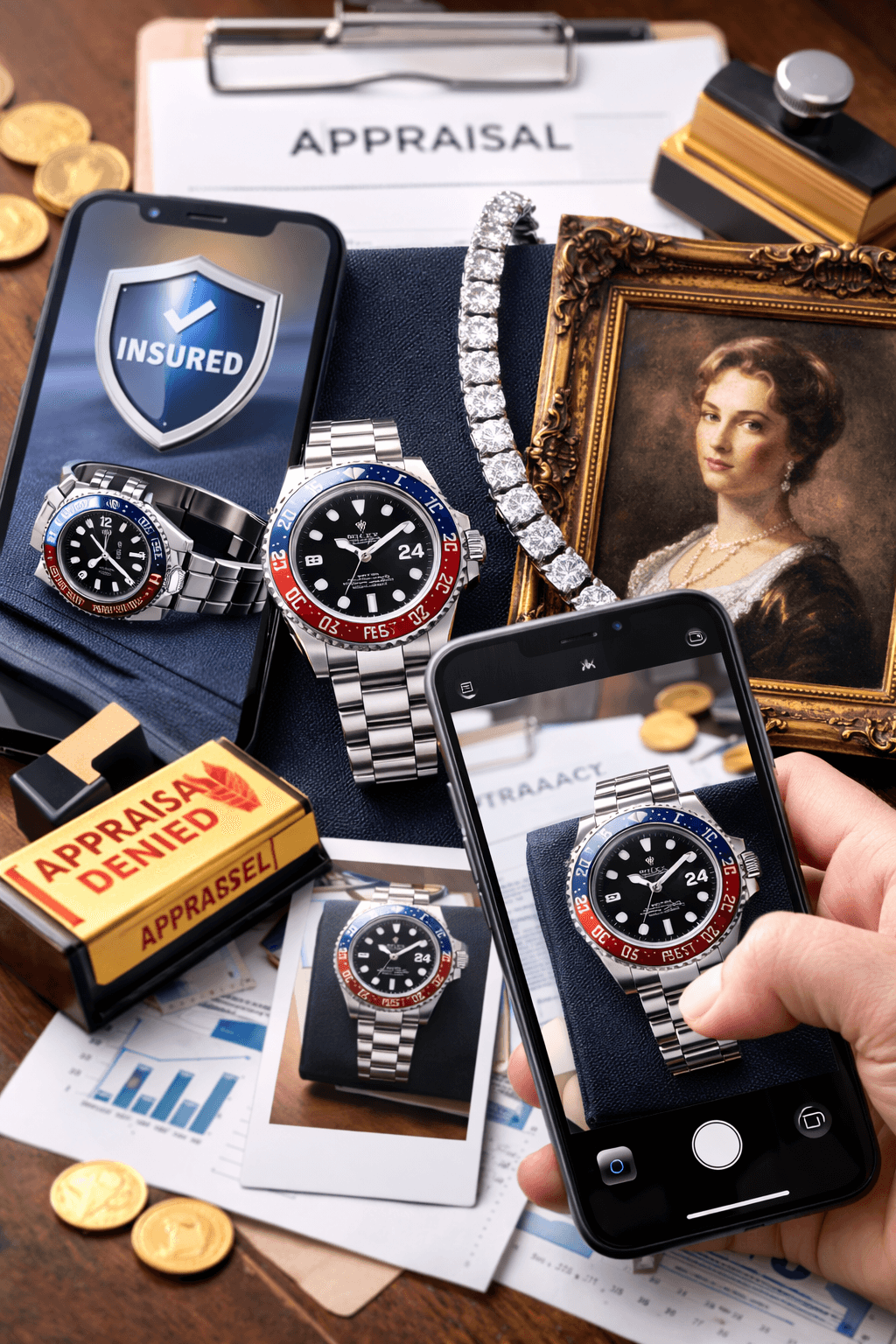

Rethinking Collectible Insurance: WAX vs. Traditional Models
Collectors of high-value items—watches, jewelry, art, and rare collectibles—are increasingly facing challenges with traditional insurance methods. Historically, luxury insurance has demanded formal appraisals, lengthy underwriting processes, and complex paperwork. But emerging platforms are now offering alternatives that simplify coverage while meeting the needs of modern collectors.
The following table highlights how newer approaches compare to traditional insurance models:
Feature | Traditional Insurance | WAX | |
|---|---|---|---|
Appraisal Requirement | Mandatory formal appraisal; often weeks-long process with associated fees | Photo-based underwriting; coverage can be established almost instantly | |
Speed of Coverage | Slow onboarding due to reliance on appraisers and paperwork | Rapid setup—snap a photo, submit details, and get coverage quickly | |
Flexibility | Limited flexibility; policies may restrict location, usage, or transfers | Global, continuous coverage tailored for collectors on the move | |
User Experience | Complex forms and extensive documentation; high friction for new collectors | Streamlined, collector-focused experience with minimal barriers | |
Cost | Appraisal fees, endorsements, and often high premiums | No appraisal fees; premiums based on market data and item-specific valuation | |
Market Adaptation | Less responsive to shifting market values or emerging collectibles | Real-time valuations and updates, reflecting current market trends | |
Community Engagement | Primarily transactional; limited engagement |
|
Why This Matters
The global collectibles insurance market is expanding rapidly, with recent estimates showing annual growth of around 6%. Collectors are managing billions of dollars in assets worldwide, and these items are increasingly diverse—ranging from rare watches to vintage instruments and fine art.
As the market evolves, insurance solutions that prioritize speed, transparency, and adaptability are gaining traction. Modern approaches focus on reducing friction for collectors, allowing them to secure their valuables without disrupting the enjoyment of their hobby.
Conclusion
While traditional insurers continue to rely on long-standing practices, modern collectible insurance solutions demonstrate that efficiency and collector-centric design can coexist with comprehensive protection. The comparison highlights how technology and market insights are reshaping how valuable collections are safeguarded, offering faster, more flexible, and accessible options for collectors at all levels.