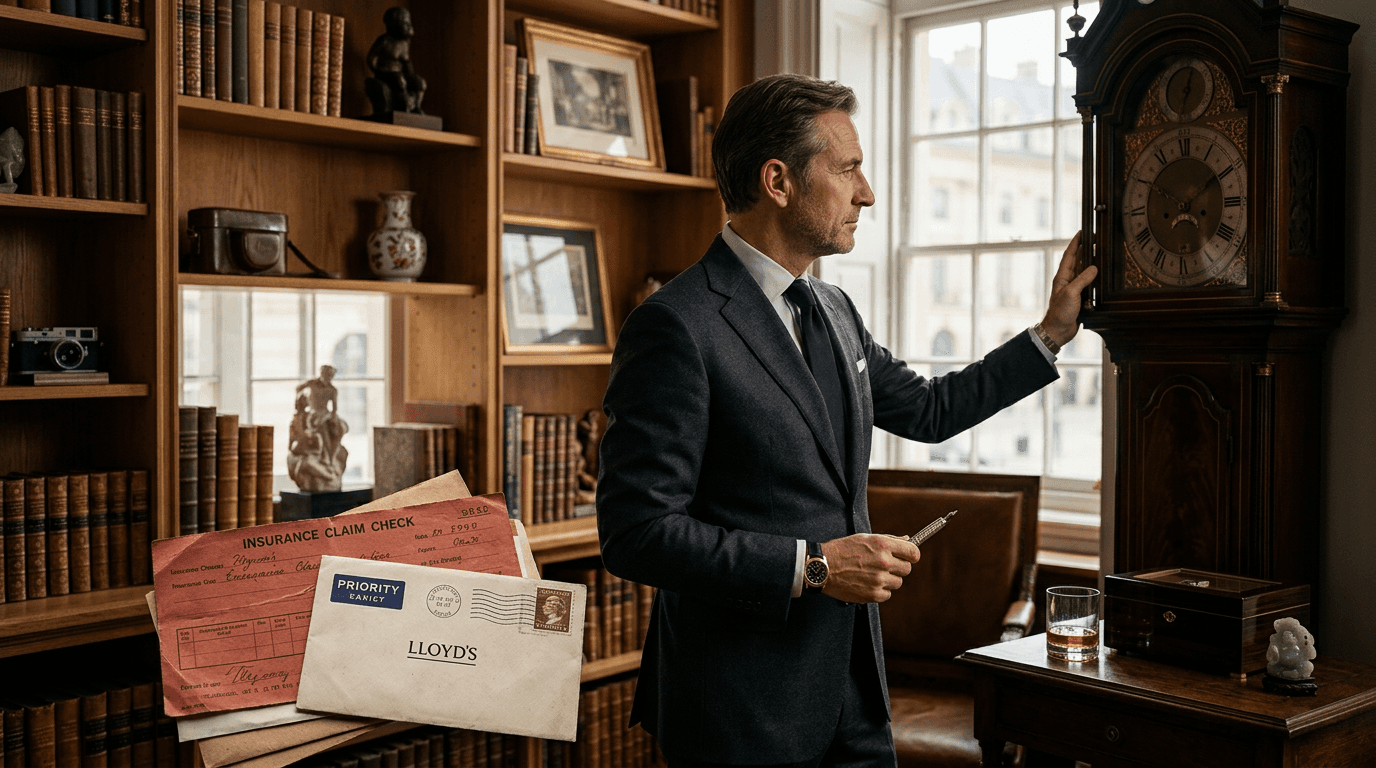

"I have the money, Angel," he told me two weeks later, staring at a settlement check that covered every penny of the market value we had appraised. "But I’ve called every dealer from London to Tokyo. The watches are on a three-year waitlist, the bag is 'allocation only,' and finding that specific '52 neck profile again? It’s like chasing a ghost."
Julian had encountered the most frustrating hurdle in the modern luxury market: The Replacement Delay.
In a world where scarcity is the primary currency, a traditional insurance payout is often just the beginning of a long, uphill climb. For the enthusiast, this matters because "being made whole" isn't just about the digits in your bank account—it’s about having that piece back on your wrist, in your hand, or on your wall.
The Myth of the Instant Swap
Twenty years ago, if you lost a high-end asset, you could usually walk into a boutique or call a trusted broker and replenish your collection within the month. Today, the luxury landscape is defined by "The Wait."
Take the luxury watch market. Even with recent price corrections in the secondary market, the primary retail market for "hype" steel sports watches remains locked behind a fortress of "Preferred Client" lists. If your insured Submariner disappears, the insurance check covers the cost, but it doesn't grant you the five-year relationship required to buy one at retail again.
The same applies to the world of haute maroquinerie. For a serious handbag collector, a Birkin isn't just leather and hardware; it’s an achievement unlocked through years of brand loyalty. When that asset is lost, you aren't just losing an object; you’re losing the "spot" you occupied in the ecosystem.
Why Scarcity Changes the Insurance Equation
When we talk about protection at WAX, we often talk about "Agreed Value." This is vital because it ensures you get the real-world market price, not the original MSRP. But as Julian learned, even market value has a weakness: Liquidity of Goods.
You might have $50,000 for a vintage Gibson Les Paul Goldtop, but if there are only three for sale globally and none of them meet your condition standards, your collection remains empty. This is why the "Replacement Delay" is the silent killer of a collector’s joy. The longer the gap between loss and replacement, the more the collector feels the "phantom limb" of their missing piece.
Strategizing for the Gap
How do we protect ourselves against a market where money can't buy time? It starts with three practical steps:
Meticulous Documentation: If you have to hunt for a replacement, you need to know exactly what you’re hunting for. Our free collection management tool at WAX allows you to store high-res photos, serial numbers, and even notes on specific patina or "birth year" details. When you go to a broker to find a replacement, showing them exactly what you lost helps them source an identical match faster.
Market-Linked Valuations: Scarcity drives prices up. If your insurance limit is based on what you paid three years ago, you won't even have enough to enter the secondary market where "immediate" replacements actually live. We recommend a "white glove" review of your values at least once a year.
Leveraging the Concierge: This is where the human element beats the algorithm. When our members face a loss, they aren't just handed a check and a "good luck" handshake. Our concierge team is deeply embedded in these cultures. If you need to find an allocation-piece or a specific reference of a reference, we use our network to help bridge that gap.
The Heart of the Matter
We collect because these items tell our stories. They mark anniversaries, birthdays, and hard-won career milestones. When an item is lost or stolen, that story is interrupted.
The "Replacement Delay" is a reminder that in the modern luxury world, protection isn't just about financial recovery—it's about heritage preservation. You deserve a partner who understands that a check is a tool, but a replaced heirloom is the goal.
Don't wait until there's an empty space in your safe to realize how hard it is to fill. Let’s make sure your collection is organized, appraised, and backed by people who know exactly what you’ve lost—and how to help you find it again.