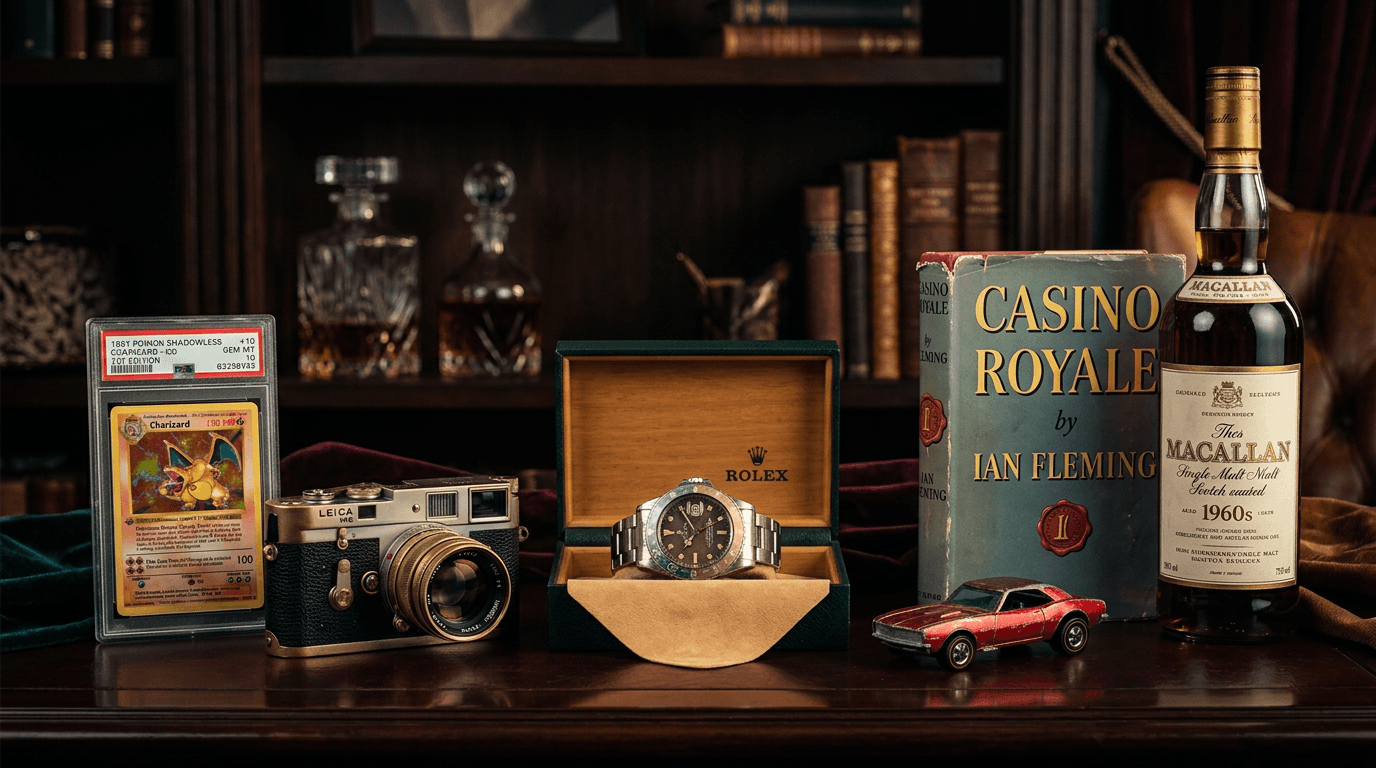
In an era defined by rapid-fire digital auctions and Instagram-fueled hype, the most valuable tool in a collector’s arsenal isn't a loupe or a ultraviolet light; it's a library card. Whether you are chasing a rare vintage chronograph or a pre-war baseball card, the ability to trace an asset back to its source—through original manufacture records, sales logs, and period advertisements—is what separates a speculative hobbyist from a true steward of culture.
The Paper Trail of Authenticity
Why do these libraries matter? Because provenance is the only antidote to the "Frankenstein" asset. In the watch world, for instance, a dial might be period-correct but not original to that specific serial number. In the world of sports memorabilia, a jersey might be "game-worn," but without the team’s original equipment logs, it’s just an expensive piece of polyester.
The American Numismatic Society (ANS) in New York City is a prime example of this intellectual bedrock. For coin collectors, the ANS library is a cathedral of data, housing over 100,000 items, including auction catalogs that date back to the 18th century. When a six-figure coin hits the block, the serious bidders aren’t just looking at the luster; they are looking at the ANS records to see where that coin was in 1920.
Similarly, the National Baseball Hall of Fame’s Giamatti Research Center serves as the ultimate arbiter for sports history. Beyond just stats, their archives contain decades of scouting reports and correspondence. For a collector, these documents provide the "connective tissue" that transforms a piece of wood or leather into a historical monument.
Private Archives and the "White Glove" Barrier
While public institutions are invaluable, some of the most critical data is held behind private doors. This is particularly true in luxury horology and automotive circles.
The Omega Museum and Archives in Bienne or the Patek Philippe Library in Geneva are more than just PR tools; they are the keepers of "Excerpts from the Archives." These documents verify the date of manufacture and the original configuration of a timepiece. For a serious collector, obtaining an extract is the final step in de-risking a massive investment.
However, navigating these private archives can be daunting. Manufacturers are often protective of their data, and many archives are only accessible to scholars or high-value clients. This is where the importance of a networked community comes into play. At WAX, our white-glove concierge service often acts as the bridge between the collector and these gatekeepers, helping to organize the documentation necessary to prove not just what an item is, but what it was born to be.
The Digital Renaissance: The Internet Archive and Beyond
The modern collector must also look to decentralized libraries. The Internet Archive and specialized databases like WorthPoint or Heritage Auctions’ historical archives have democratized research. They allow collectors to track price realization and catalog descriptions across decades.
But a digital scan is only as good as the eyes interpreting it. The nuance of a 1960s advertisement—the font choice, the specific wording of a warranty, the SKU listed in a jeweler’s ledger—requires a level of forensic reading that most enthusiasts are only beginning to master.
Building Your Own Reference Library
Every collection should be mirrored by a library. If you own three vintage Rolexes, you should own ten books about them. This "secondary collection" of reference material doesn’t just increase your knowledge; it increases the value of your primary assets. When the time comes to sell or insure your collection, having the original catalog or a period-correct advertisement to accompany the piece adds a layer of "completeness" that the market rewards.
At WAX, we believe that safeguarding a collection is about more than just insurance policies—it’s about information management. Our free collection management tools are designed to help you catalog not just the assets, but the research that supports them. Uploading scans of archival documents alongside your high-res photos ensures that the "story" of your asset is never lost, no matter how many times it changes hands.
The Bottom Line
Whether it’s the Library of Congress’s comic book collection or the Smithsonian’s numismatic records, these institutions exist to preserve the "why" behind the "what." For the enthusiast, they offer a deeper connection to the hobby. For the serious collector, they offer the data-driven confidence needed to navigate a market rife with misinformation.
Before you make your next acquisition, ask yourself: Have I checked the library? Because in the world of high-value collectibles, the most expensive mistake you can make is the one that was already documented fifty years ago.