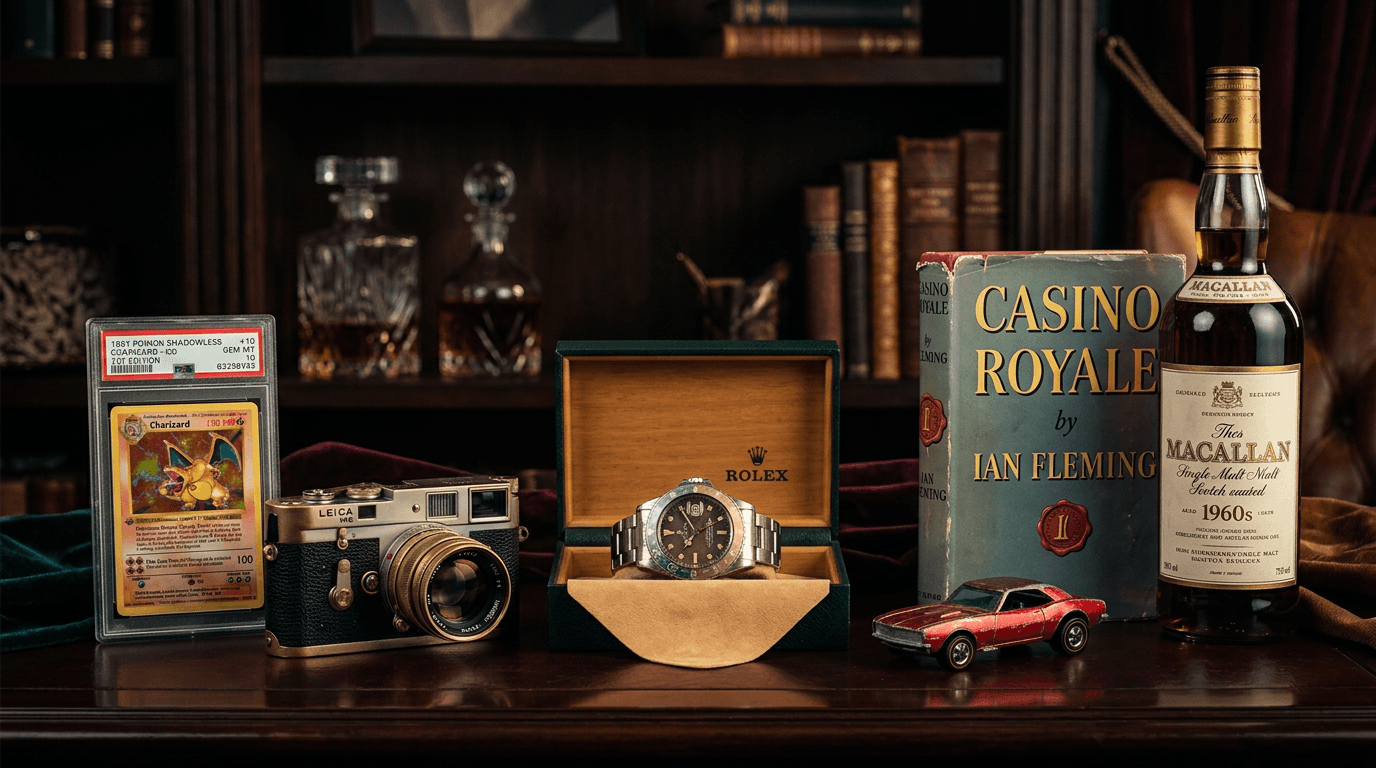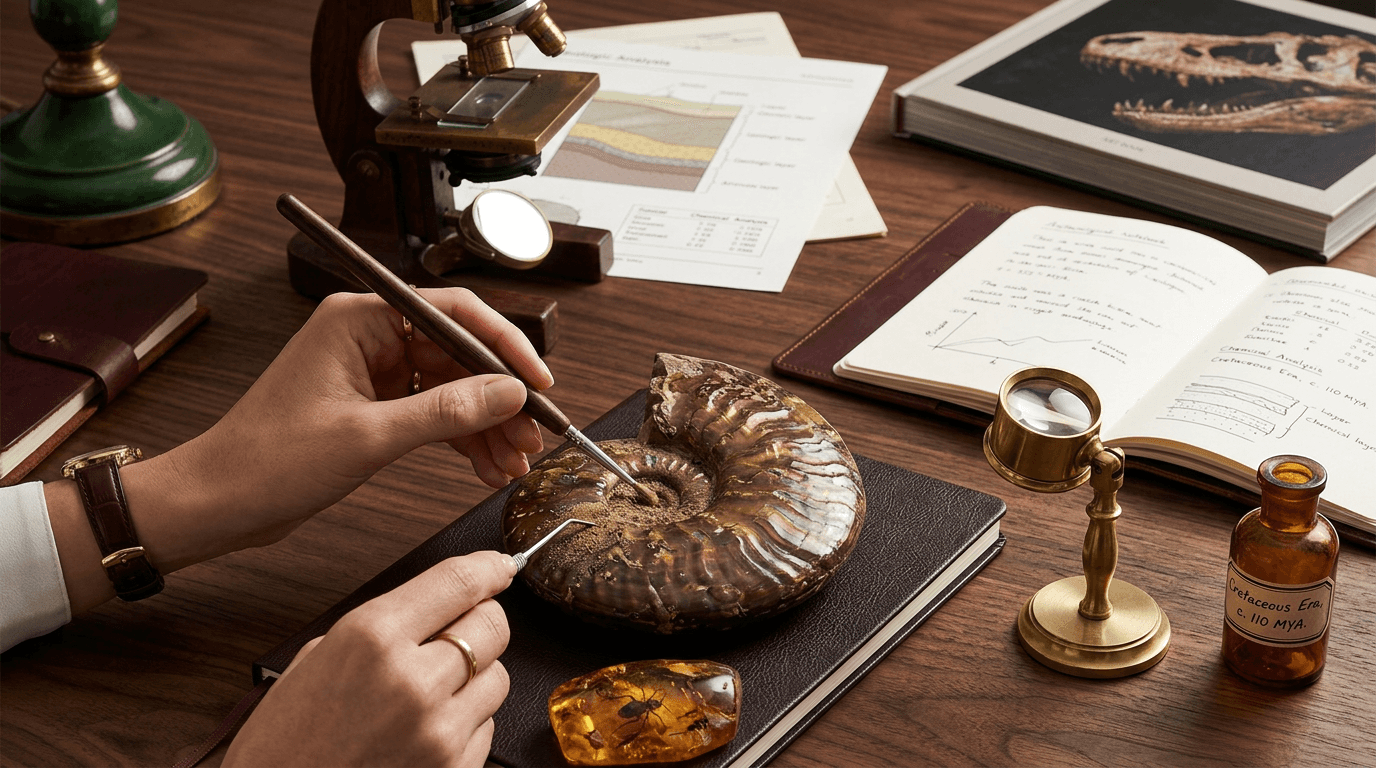

In the world of high-end collectibles, we’ve moved past the era of mere "condition." We have entered the era of forensics. Today, the world's most significant collectibles are being studied with the same rigor, technology, and historical curiosity as a Roman coin unearthed in a Tuscan field.
Why does this matter? Because for the serious collector, understanding the "how" of an object is the only way to truly secure its "why."
The Microscopic Paper Trail
At WAX, we often talk to collectors who view their items as static assets. But every collectible is a record of a moment in industrial history. Take, for instance, the way specialists now reconstruct the production history of vintage sports cards.
By using microscopic analysis, experts can identify the specific "print snow" or "pixel patterns" unique to a particular lithographic press used in the mid-20th century. They aren't just looking for a grade; they are looking for the mechanical fingerprint of the factory. If a card lacks the specific ink-fringe expected from a 1950s printing plate, it doesn’t matter how "mint" it looks—the archaeology tells a different story.
This level of scrutiny extends to paper aging. True vintage paper ages from the outside in, a process called oxidation that creates a specific gradient of "tanning" on the edges. When we see a comic book from the 1940s with stark white pages but no evidence of de-acidification, the red flags go up. It’s the equivalent of finding a "Viking" sword made of stainless steel. The material science simply doesn't match the timeline.
Reconstructing the "Work Day"
Part of the joy of collecting is the nostalgia—the connection to a bygone era. Modern "collectible archaeology" allows us to manifest that nostalgia through data.
Specialists in numismatics (coins) and comic books often use historical documentation—shipping manifests, factory logs, and even weather reports—to verify the existence of certain rarities. We look for "manufacturing marks"—those tiny, idiosyncratic flaws like a chipped die in a coin press or a misaligned color pass on a jersey—to trace an object back to a specific day, or even a specific worker.
This forensic approach transforms a "misprint" from a defect into a "key-marker." It proves provenance in a way a simple COA (Certificate of Authenticity) never could. It links your asset to a physical reality that existed decades ago.
Why Forensic Collecting is the Future
You might ask: Is this level of detail really necessary?
If you are a budding collector, perhaps not yet. But as you move into serious acquisitions, these details become your greatest shield. We’ve seen incredible advancements in "super-fakes"—reprints and restorations so sophisticated they can fool the naked eye.
Treating your collection like an archaeological site does three things:
It Validates Value: Market prices are increasingly driven by "purity." A card that is "all-original" under 10x magnification commands a massive premium over one that has been expertly "pressed" or "cleaned."
It Tells a Better Story: There is a deep, human satisfaction in knowing that your 1960s memorabilia bears the specific ink-clogging patterns typical of the Chicago plants of that era.
It Simplifies Protection: When you use a platform like WAX to catalog your collection, having this level of forensic detail makes insurance valuation instantaneous and indisputable.
The WAX Perspective: Protecting the History
At WAX, we aren’t just an insurance agency; we are enthusiasts who respect the science of the hobby. Our digital platform is designed to help you organize these "excavation reports." Whether you’re uploading high-resolution scans of a rare coin or documenting the weave patterns of a game-worn jersey, our tools help you build a digital fortress around your physical assets.
If you ever feel overwhelmed by the technicalities, our white-glove concierge service is staffed by specialists who live for this level of detail. They understand that a "scratch" isn't just damage—it might be the diagnostic mark that proves your item is the real deal.
We encourage you to look closer at what you own. Pick up a loupe. Study the edges. Search for the manufacturing marks. Your collection isn't just a portfolio; it’s a piece of history waiting to be decoded. And once you’ve decoded it, let us help you make sure it stays protected for the next generation of explorers.