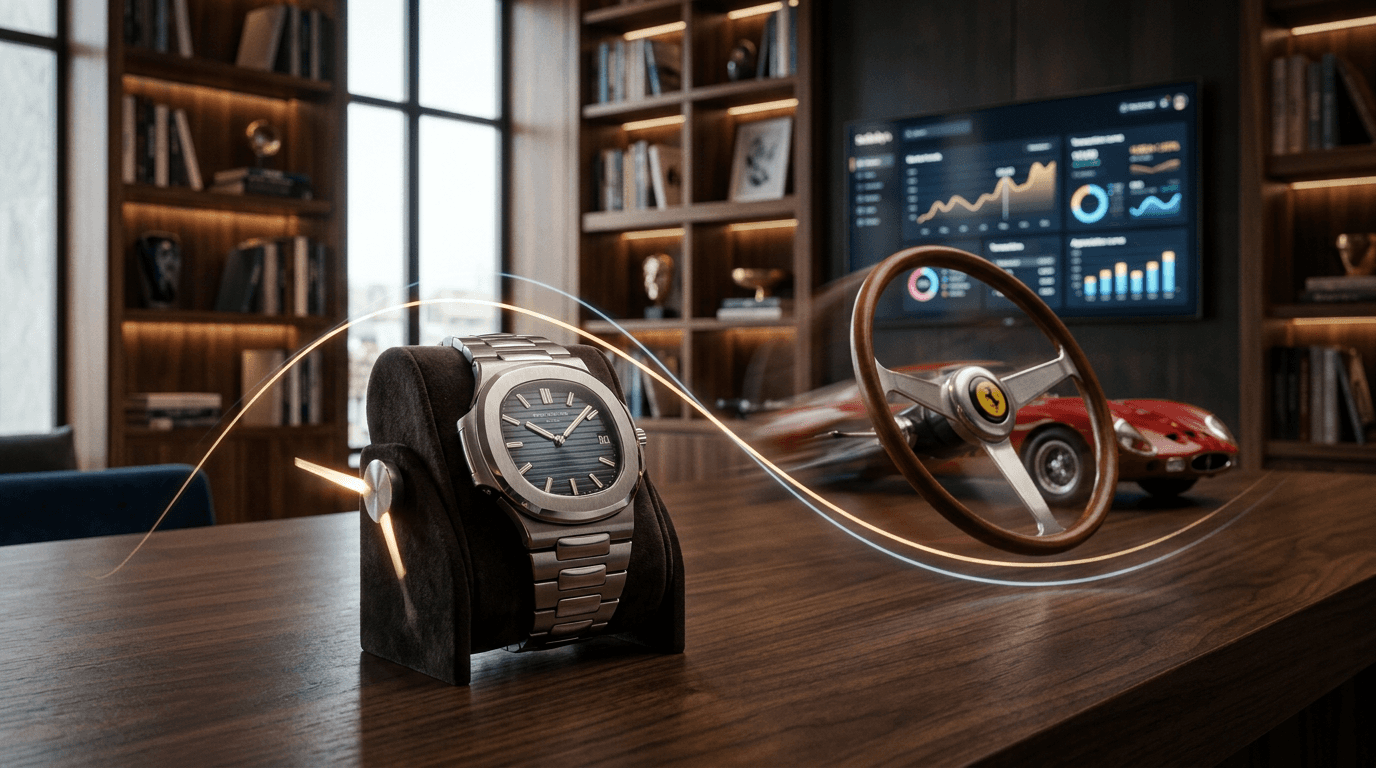

Specifically, the interval of time between an asset’s public transactions—what we might call its "market velocity"—acts as a powerful, invisible hand in shaping perceived value. In a world where transparency is the new currency, the frequency with which an object changes hands tells a story that either builds a legend or breeds suspicion.
The Allure of the Sleeping Giant
There is a particular kind of romanticism reserved for the "fresh to market" piece. When a watch has sat in a safe, or better yet, on a single wrist for thirty years, its reappearance isn't just a sale; it’s an event.
From a psychological perspective, a long gap between transactions signals stability and "vetted" desirability. It suggests that the previous owner found the object so fulfilling that the lure of liquidity couldn't pry it away. This "holding period" acts as a proxy for quality. In the eyes of a serious collector, a watch that hasn't been seen in twenty years carries a vacuum of information that can only be filled by prestige. The lack of recent data points allows the imagination—and the price—to run wild.
At WAX, we often see this reflected in how collectors approach their portfolios. The pieces that are cataloged and then left untouched for years often accrue a "provenance premium" that high-frequency flippers simply can’t replicate.
Post-Speculative Burnout: The "Hot Potato" Effect
Conversely, when the time between transactions shrinks into months or weeks, the psychology shifts from reverence to skepticism. We saw this vividly during the 2021-2022 market frothing. When the same "Tiffany" Blue Nautilus or Rolex Daytona appears at three different auction houses or dealer listings in a single year, it begins to lose its status as a mechanical marvel and starts looking like a "hot potato."
High velocity often signals that an item has transitioned from a collectible to a commodity. When an asset is traded too frequently, the market begins to sniff out "churn." Collectors start to wonder: Is there a hidden flaw? Is the market being manipulated? Or is the current holder simply desperate to exit before the bubble bursts?
Frequent transactions strip away the soul of the object. Each quick flip peels back a layer of the "mystery" that drives luxury value, replacing it with the cold, hard reality of a spreadsheet. For the enthusiast, this is where the joy of the hobby dies; for the investor, it’s a red flag for volatility.
The "Goldilocks" Zone of Liquidity
So, where is the sweet spot? For a healthy market, you want enough transaction data to establish a fair market value, but enough scarcity to maintain desire.
For modern references—think the current Submariner or the Royal Oak 15500—a transaction every 2-3 years is a sign of a healthy, liquid ecosystem. It proves the watch is wearable, tradable, and consistently valued. For blue-chip vintage or "holy grail" pieces, that interval should ideally stretch to a decade or more.
This is why data-driven management is no longer optional for the serious collector. Understanding the historical cadence of your specific reference allows you to time an entry or exit with surgical precision. Utilizing WAX’s free collection management tools doesn’t just help you organize your watches; it helps you visualize their "market stasis."
Why This Matters to You
Whether you are a budding collector or a seasoned veteran, the time-between-transactions metric should influence your strategy in three ways:
For the Buyer: Always ask for the "provenance of ownership." If a watch has changed hands three times in eighteen months, ask why. You might be buying someone else’s problem or a piece of a dying hype cycle.
For the Seller: Patience is a value-add. If you can afford to hold a piece through market cycles, you aren't just waiting for the price to go up; you are letting the "market fatigue" of that reference reset, making it "fresh" for the next generation.
For the Steward: Proper protection is what enables long-term holding. You can’t wait a decade for the right market moment if your collection is at risk.
In the end, horology is about the passage of time. It is only fitting that time itself is what ultimately determines what these machines are worth. By respecting the interval, we respect the craft—and our capital.