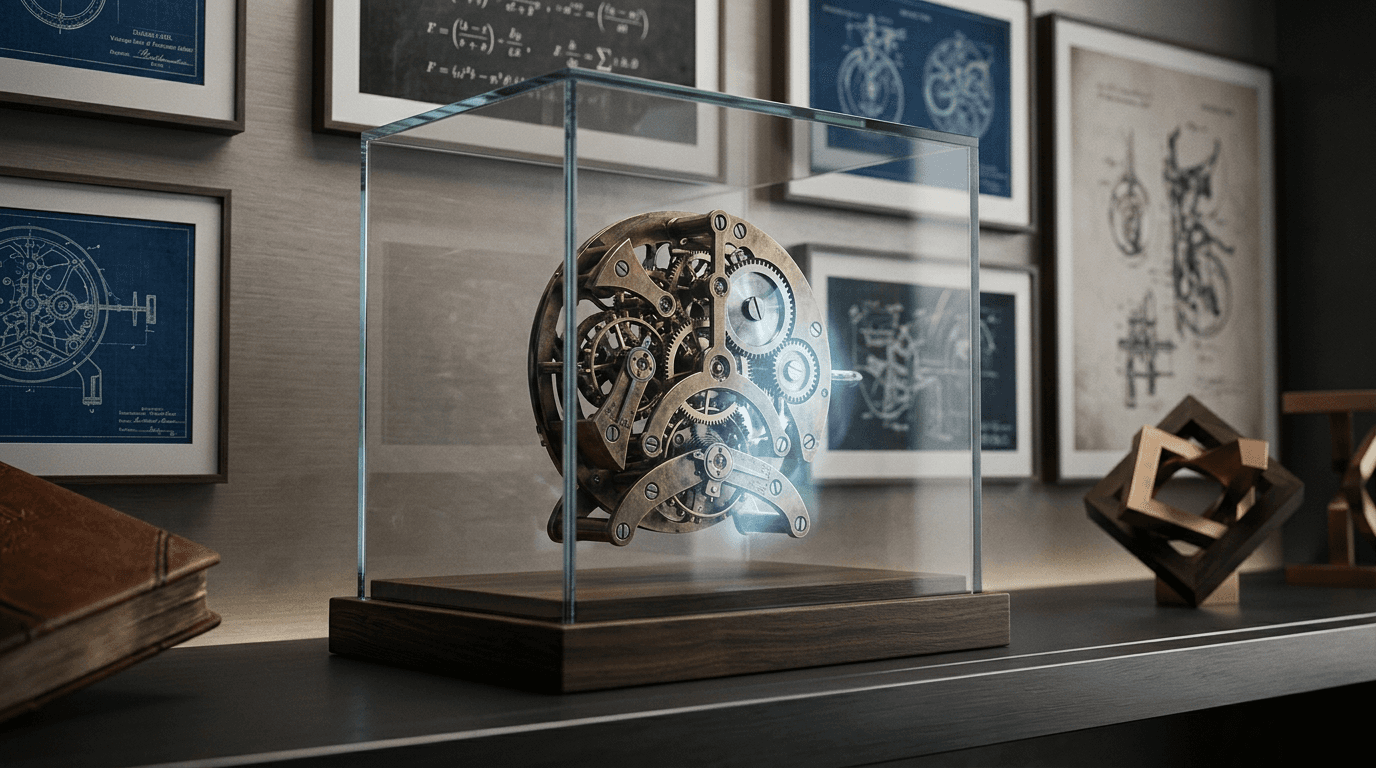

At WAX Collect, we spend a lot of time talking about the macro: market trends, global logistics, and multi-million dollar policies. But lately, I’ve been sitting down with the "micro-collectors." These are the enthusiasts who don’t just look at their objects; they interrogate them. They chase the production details that the manufacturers likely never intended for us to notice.
Why does a specific shade of "Long P" ink on a vintage comic book or a slight misalignment in a Tiffany & Co. stamp drive someone to spend three times the market average? It isn't just about ego. It’s about the hunt for the "Ghost in the Machine."
The Aesthetics of the Accidental
Take "Mark," a pseudonym for a high-level sneaker archivist I spoke with last week. Mark doesn't care about the latest hype drop. He spends his nights scouring auction blocks for 1985 Air Jordan 1s—specifically those produced at the "BY" factory versus the "ST-P" factory.
"The 'BY' factory had a slightly higher cut on the collar," Mark told me, his eyes lighting up with a nostalgic glow. "The leather was sourced differently for a three-month window. Most people see a red shoe. I see a specific Tuesday in July 1985 where the machine was calibrated just a fraction differently."
This is "Vaulted Voices" in its purest form. For Mark and others like him, the value isn't in the brand's marketing—it’s in the anomaly. These collectors are looking for the human element in mass production. In an era where everything is laser-cut and 3D-printed to perfection, a "factory error" or a "transitional dial" is a reminder that people once made these things by hand.
Why the Micro Matters
For the serious collector, these "invisible" details act as a layer of security and a mark of sophistication. For the budding collector, they represent a steep but rewarding learning curve.
Provenance through Particulars: A specific solder point on a vintage Gibson guitar or a certain font weight on a 1960s Leica camera acts as a biological fingerprint. It’s the ultimate defense against the sophisticated fakes flooding the market today.
Scarcity within Abundance: There might be 10,000 vintage Rolex GMT-Masters, but how many have the "Radial Dial" where the lume plots are positioned slightly closer to the center? Suddenly, a common luxury item becomes a one-of-one unicorn.
The Narrative Drive: We collect stories, not just things. Buying a watch because it’s expensive is easy. Buying a watch because the dial turned a "tropical" chocolate brown due to a specific paint instability in a 1968 production run is a story you can tell forever.
The Burden of the Detail-Oriented
There is, of course, a practical side to this obsession. When you are chasing "Mark II" dials or "Thin Case" variants, documentation becomes your best friend.
I’ve seen collectors lose sleep because they couldn't prove a specific variation was factory-original versus a later service replacement. This is where the joy of collecting can turn into a headache of record-keeping. It’s exactly why we built the free collection management tools at WAX. When you’re cataloging a collection defined by microscopic nuances, you need high-resolution photos and a place to store those hyper-specific notes.
Our white-glove concierge service often handles these exact requests. We help collectors verify that their "Long E" Rolex or their "Double Name" Patek is properly appraised—not just as a standard model, but for the rare bird it actually is.
Protecting the Nuance
Whether you’re hunting for the "serif" on a 19th-century coin or the specific grain of a Hermès leather from the early 90s, remember that these details are what make your collection yours. They are the secrets you share with your assets.
At WAX, we believe that if you’re passionate enough to notice the "Flat 4," we should be passionate enough to help you protect it. Market values for these hyper-specific variants can swing wildly based on a single auction result. Staying protected means having a partner who understands that a "minor production difference" is actually a major investment.
So, keep looking closer. Use the loupe. Count the stitches. In a world of mass-produced noise, the beauty is always in the details nobody else sees.


